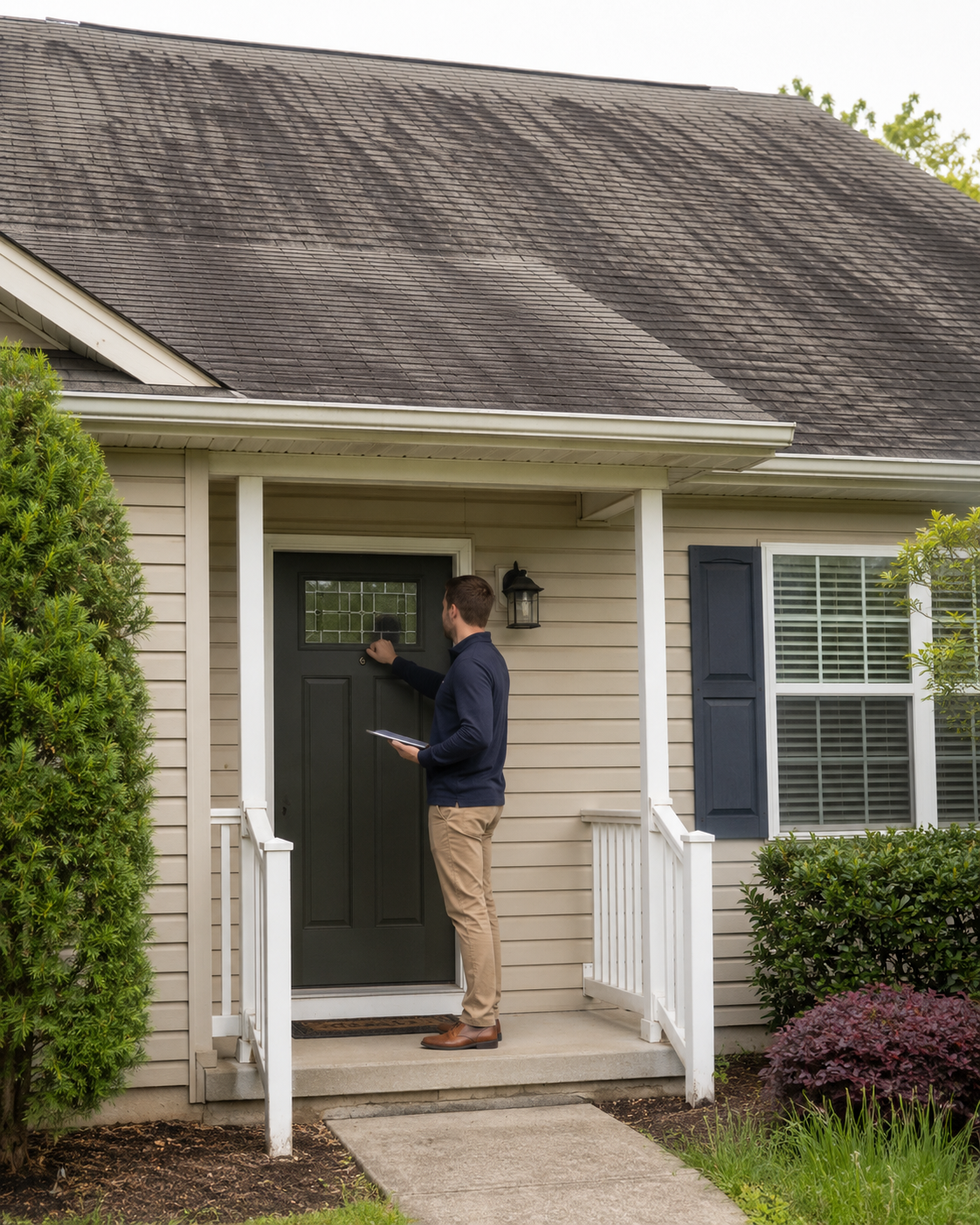
Most roofing contractors knock on doors with the same pitch — and get the same door shut in their face. It’s almost always some version of the storm damage and insurance angle: “We were in the neighborhood after the last storm — your roof may have hail damage, and your insurance might cover a full replacement.” Homeowners have heard it so many times that the moment they recognize it, the conversation is over. In storm-heavy markets, they’ve heard it three times that same week.
The problem isn’t just repetition. The storm pitch asks the homeowner to believe in damage they can’t see, file a claim they don’t understand, and trust a stranger with their insurance company. That’s a lot of friction at the front door.
And here’s the bigger issue: what if there hasn’t been a storm in years? The entire storm pitch depends on weather you can’t control. No hail, no high winds, no recent event — no reason to knock. Contractors who only know the insurance angle end up sitting on their hands waiting for the next storm to roll through. Algae doesn’t wait for weather. It’s growing on roofs in your market right now, every day of the year — which means you always have a reason to knock.
Door knocking for roof rejuvenation flips all of that. You’re not selling a $20,000 replacement or an insurance claim. You’re pointing out something the homeowner can see with their own eyes — those ugly black streaks running down their shingles — and offering a fix that costs a fraction of a new roof, no adjuster required. When you knock with a reason instead of an introduction, everything changes.
Here’s the method.
Step 1: Find the Algae Stains Before You Ever Knock
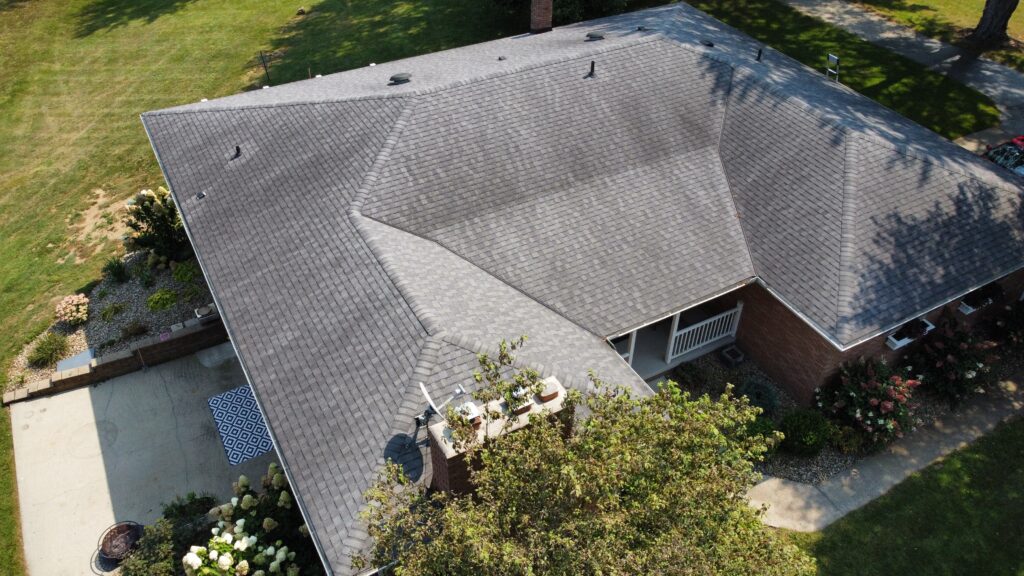
Before you set foot on a porch, walk or drive the neighborhood and look for roofs with visible algae staining — the black streaks caused by Gloeocapsa magma, the airborne algae that feeds on the limestone filler in asphalt shingles. You’ll find it on almost every aging roof in humid regions, and it’s most visible on north-facing slopes and shaded sections.
What to look for:
- Black streaks running vertically down the shingles (the classic algae signature)
- Dark discoloration concentrated on north-facing or tree-shaded slopes
- Moss or lichen growth along shingle edges and in valleys
- A patchy, dirty, “old” look on a roof that’s structurally only 10–15 years in
The algae stain is your ticket to the door. It gives you a specific, visible, undeniable reason to be standing there — and it means the homeowner can step outside and verify everything you say in ten seconds. You’re not asking them to trust you. You’re asking them to look up.
Pro tip: note which slope and where the staining is worst before you knock. “The streaking on the left side of your front slope” is ten times more credible than “your roof looks dirty.”
Step 2: Knock — and Skip the Introduction
Here’s the part that feels wrong until you try it: don’t introduce yourself first.
When the homeowner opens the door, lead with the reason:
“The reason why I’m here is because of the black algae stains on the front slope of your roof — you can actually see them from the street.”
That’s it. No name, no company, no “how are you today.” Here’s why it works:
It breaks the sales pattern. Homeowners have a script in their head for door-to-door salespeople, and it starts with “Hi, my name is…” When you skip it, their brain doesn’t file you under salesperson — it files you under someone with information about my house.
It answers their only question. The single thing every homeowner is thinking when they open the door is “why is this person here?” Answer it in your first breath and the tension drops immediately.
It’s about them, not you. Your name and company don’t matter yet. Their roof does.
Introduce yourself after they engage — usually when they ask “what stains?” or step out to look. That’s when you say, “I’m [name] with [company] — we do roof rejuvenation here in [neighborhood].” Now your introduction lands as an answer to their curiosity instead of the opening of your pitch.
Step 3: Get Them Looking at Their Own Roof
The moment the homeowner steps outside and looks up, you’ve won the hardest part of the conversation. Now educate — don’t pitch:
- Those black streaks are algae eating the limestone in their shingles, not just dirt.
- Left alone, algae holds moisture, accelerates granule loss, and shortens the life of the roof.
- The staining is why the roof looks 25 years old when it’s only 12.
- And the key line: “The good news is this doesn’t mean you need a new roof.”
That last sentence is where roof rejuvenation separates itself from every replacement pitch they’ve ever heard. You’re the contractor telling them they don’t have to spend $20,000 — that a soft-wash treatment and rejuvenation can clean the staining, restore shingle flexibility, and add years of life for a fraction of the cost.
Step 4: Close for the Inspection, Not the Sale
Don’t try to sell the job on the porch. The porch close is simple:
“I’m going to be doing a couple of roofs in the neighborhood this week anyway — I can take a closer look and give you a free assessment while I’m here. Takes about fifteen minutes.”
Low pressure, low commitment, neighborhood social proof. The inspection is where the sale happens.
Remember: this is a retail sale, not an insurance job. There’s no adjuster picking up the tab — the homeowner is paying out of pocket, and people need time to process an investment in their home. Pushing for a signature on the porch works against you. Give them the assessment, give them a clear price, and give them room to think. A homeowner who feels informed instead of pressured is the one who calls you back — and refers the neighbors.
Quick Do’s and Don’ts
Do:
- Knock between 4–7 pm on weekdays or late morning on Saturdays, when people are home
- Reference the specific location of the staining on their roof
- Carry before/after photos of rejuvenated roofs on your phone
- Ask about the neighbors’ roofs — one street can be a week of work
Don’t:
- Knock houses with no visible staining (you’re burning your credibility and your time)
- Lead with your company name or a canned greeting
- Pressure for a same-day contract — close for the inspection
- Overstay: if they’re not interested, leave a door hanger and move on
The Bottom Line
Door knocking still works in 2026 — but only when you knock with a reason. Algae stains give roof rejuvenation contractors something no replacement salesperson has: a visible problem, an affordable solution, and an opener that doesn’t sound like a pitch.
Find the stains. Knock. Skip the introduction. Lead with “the reason why I’m here is because of the black algae stains on your roof.” Then let the roof do the selling.
Ready to add roof rejuvenation to your services? Contact Uglyroof to learn how our rejuvenation process helps contractors turn stained roofs into steady revenue.