Policy • Finance • Industry Outlook
Freddie Mac’s Bulletin 2026-C just changed the rules on roof insurance. Combined with record consumer debt and tightening carrier standards, the roofing industry’s reliance on insurance-funded replacements is about to face its biggest disruption in decades. Here’s what every contractor needs to understand — and the opportunity hiding in the wreckage.
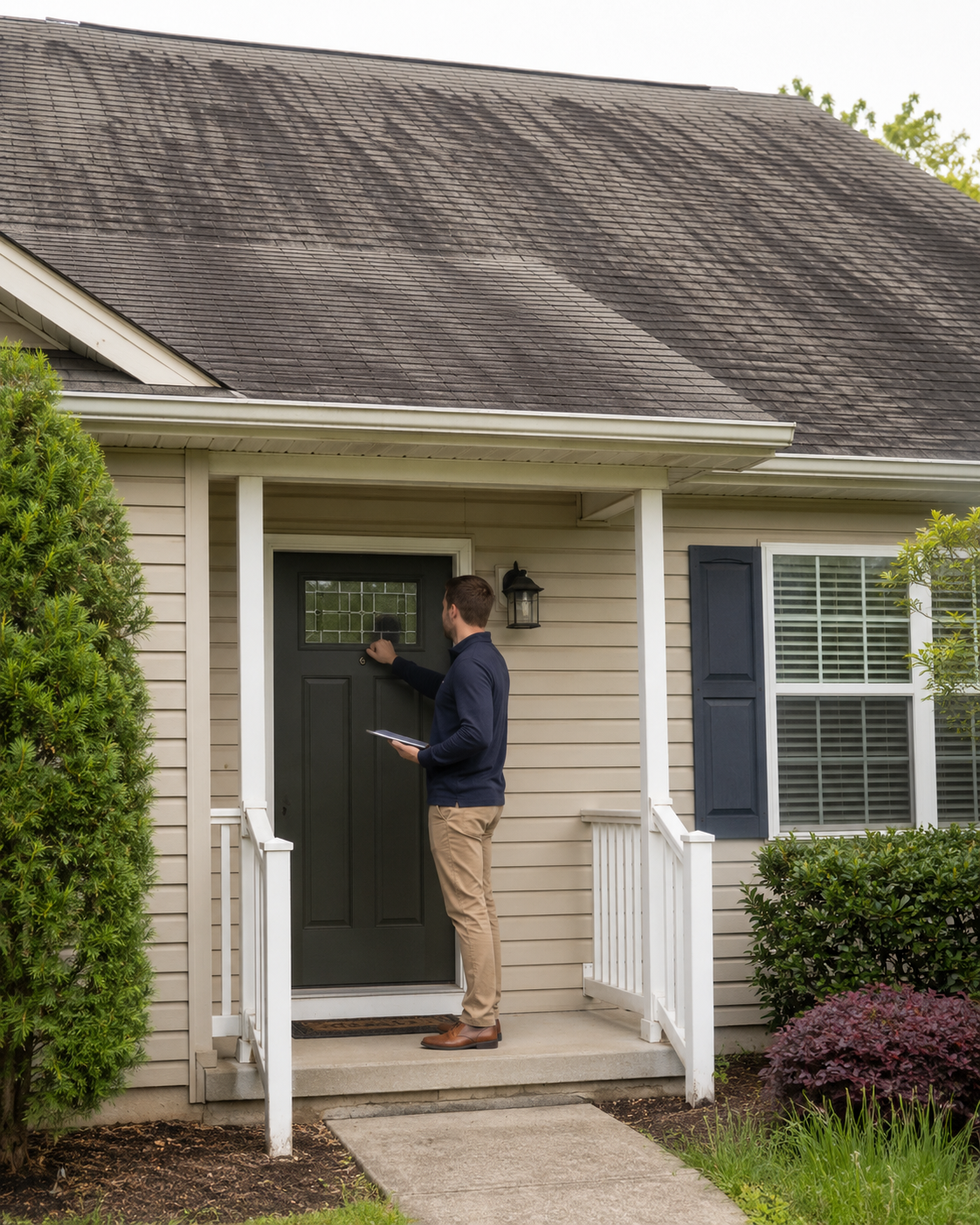
For the better part of the last decade, a significant slice of the roofing industry ran on a simple, reliable cycle: storm hits town, roofer knocks doors, homeowner files claim, eventually insurance approves a full replacement, contractor gets paid. It wasn’t exactly a business model — it was closer to a subsidy. And like most subsidies, it quietly shaped the entire ecosystem around it: how contractors marketed, how they staffed, how they priced, and crucially, what they never had to sell homeowners on investing in proactively.
That cycle is now being disrupted from multiple directions simultaneously. And the disruption isn’t coming from one bad weather year or one difficult quarter. It’s structural — written into federal lending guidelines, driven by systemic shifts in the insurance market, and compounded by a consumer debt crisis that’s squeezing homeowners out of the very flexibility they’d need to respond.
Understanding where this leads — and where the opportunities are — requires pulling back to see the full picture.
What Freddie Mac’s Bulletin 2026-C Actually Changes
On March 18, 2026, Freddie Mac issued Bulletin 2026-C, and the Federal Housing Finance Agency (FHFA) announced a significant rollback of homeowners insurance requirements that has been quietly reshaping conversations across the mortgage, insurance, and roofing industries ever since.
The most consequential change for roofing professionals: Fannie Mae and Freddie Mac will now accept Actual Cash Value (ACV) coverage for roofs on both single-family homes and condominiums. Previously, any property backed by one of these agencies — which together underwrite roughly 70% of all U.S. mortgages — required full Replacement Cost Value (RCV) coverage for its roof. That meant if a storm destroyed a 15-year-old asphalt roof, the insurer was obligated to pay for a brand-new equivalent roof at today’s prices, regardless of how much useful life the old roof had already delivered.
ACV coverage works differently. It pays what the roof is actually worth today — depreciated age, condition, and wear factored in. A 15-year-old asphalt roof on a 20-year lifespan? An ACV policy might pay out a fraction of full replacement cost, leaving the homeowner to fund the gap out of pocket.
The policy change was framed as a cost relief measure — and it is, in the short term. Full RCV roof coverage had become unaffordable or simply unavailable in wide swaths of the country, particularly in storm-prone rural and coastal areas. Allowing ACV removes a barrier to homeownership and keeps insurance accessible. FHFA Director William Pulte called it a “commonsense” correction to a Biden-era mandate that had driven up monthly costs for millions of families.
What the policy announcement doesn’t say out loud is what it means for the downstream economics of roofing. And that’s where the real story begins.
The Insurance-Funded Replacement Model: A Structural Dependency
To understand why Bulletin 2026-C matters so much for roofing contractors, you have to understand just how dependent large portions of the residential roofing market have become on insurance-funded work. In many markets — especially across the storm belt from Texas to the Carolinas — insurance claims are not simply a portion of revenue. For some contractors, they’ve been the core business model.
The storm-chase contractor emerged as an archetype: crews that follow hail events and wind damage reports, knock doors, help homeowners file claims, manage the adjuster relationship, and execute the replacement. When RCV coverage was standard, this worked beautifully. The homeowner paid their deductible, the insurer covered the rest, and everyone moved on. The homeowner got a new roof they arguably didn’t need to budget for. The contractor got a job they didn’t need to sell the homeowner on in any meaningful financial sense.
“When the insurance check covered everything, the contractor’s real customer wasn’t the homeowner — it was the adjuster. That relationship is getting a lot harder to manage.”
Now, multiple forces are tightening that model from all sides.
First, insurers themselves have been tightening long before 2026-C arrived. Roof repair and replacement claim costs reached nearly $31 billion in 2024 — a roughly 30% jump since 2022, according to data from Verisk. Carriers are raising deductibles, demanding stricter documentation, scrutinizing roof condition more closely, and in some markets, shortening the maximum acceptable roof age before they’ll write a policy at all. Billion-dollar wind and hail disaster events numbered 17 in a single recent year. Insurers are responding rationally: they are getting out of the business of subsidizing marginal roof conditions.
Second, the shift to ACV coverage means that even when a claim is approved, the payout will increasingly not cover a full replacement. For a 12-year-old asphalt shingle roof, an ACV settlement might cover 40 to 60 percent of replacement cost. The homeowner must bridge the rest — and at the exact moment when homeowners are least positioned to do that.
Consumer Debt: The Hidden Accelerant
Here is where the situation becomes genuinely precarious for the industry at large. The insurance model shift is colliding with a consumer financial landscape that has rarely looked worse for discretionary home improvement spending.
U.S. household debt hit a record $18.8 trillion at the end of 2025, up $4.6 trillion from pre-pandemic levels. Credit card balances alone reached $1.28 trillion — the highest in recorded history — while the average APR on revolving credit card debt crossed 22%. Student loan serious delinquency surged from under 1% to over 16% in a single year following the end of pandemic-era payment protections. Foreclosure starts jumped 26% year-over-year in early 2026, and completed foreclosures surged 59%.
The debt storm bearing down on homeowners
- Total U.S. household debt: $18.8 trillion — an all-time record
- Credit card balances: $1.28 trillion at an average APR of 22–24%
- Mortgage serious delinquency rose to 1.38% in Q4 2025, up from 1.09% a year prior
- The pandemic-era “savings buffer” has effectively vanished for the bottom 40% of income earners
- Average first-time homebuyer age hit a record 40 years in 2025
- Foreclosure starts up 26% year-over-year as of January 2026
This is not an abstract macroeconomic data point for roofing contractors. This is the financial profile of your customer. When a homeowner under an ACV policy gets a storm damage settlement that covers $6,000 of a $14,000 roof replacement, they need to find $8,000 somewhere. With credit card debt at 22% APR, a maxed-out savings account, and a mortgage payment 50% higher than it was five years ago, that $8,000 isn’t coming from anywhere easy.
The result is predictable and already happening: homeowners defer. They patch. They tarp. They get a quote, swallow hard, and do nothing. Some refinance or take out a HELOC if they have equity. Many simply live with the damaged roof and hope for the best — which means a roof problem becomes a ceiling problem, becomes a mold problem, becomes a much larger and more expensive crisis down the road.
For contractors who built their pipeline around the assumption that “insurance covers it, so the homeowner just says yes” — this is an existential challenge. The automatic conversion from storm event to signed contract is no longer reliable. And the $9,500 to $11,000 average replacement cost for a standard asphalt shingle roof is now a genuine object of sticker shock for a meaningful percentage of homeowners.
The Opportunity in the Gap: Where Rejuvenation Fits
This is the moment to talk about what the industry conversation has been slow to surface: the gap between “damaged but not destroyed” and “full replacement.” Because that gap, which has always existed, is now getting wider — and a very large number of homeowners are going to be stranded in it.
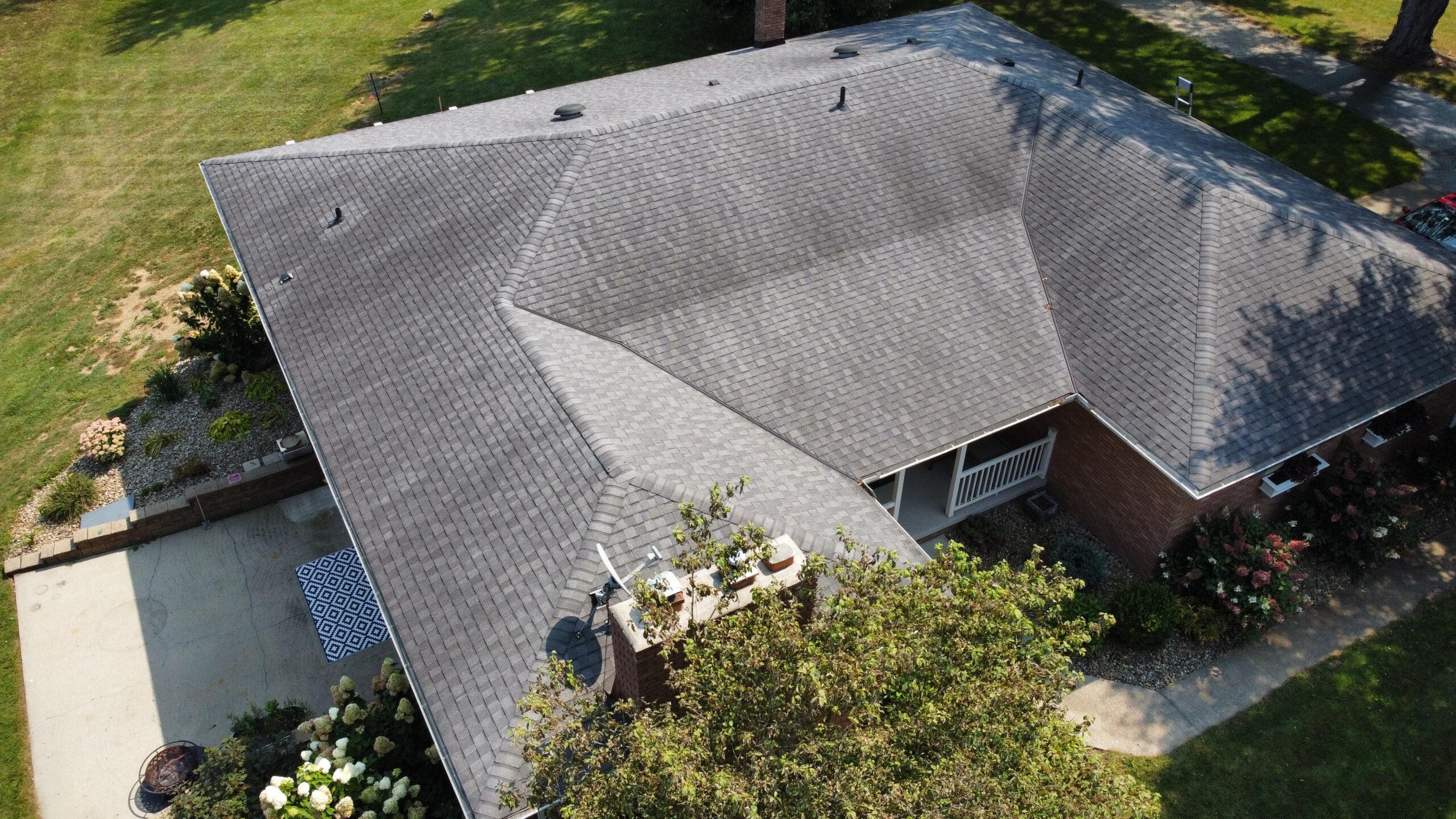
Consider the math from the insurer’s new perspective. With ACV coverage standard, a carrier looking at a 14-year-old asphalt roof with surface weathering and some granule loss isn’t necessarily approving a full replacement claim. They may classify it as a maintenance issue, a pre-existing condition, or depreciate the payout to a level that doesn’t justify a full tear-off and replacement. Meanwhile, the homeowner’s roof still has real problems: brittleness, compromised sealant, reduced water-shedding capacity. It’s not leaking catastrophically — not yet. But it is a roof that is moving toward failure.
Roof rejuvenation sits precisely in this gap. Applied correctly, rejuvenation treatments can restore flexibility and durability to aging asphalt shingles, extend a roof’s functional lifespan by five years or more, and dramatically improve its condition scoring — which matters increasingly as insurers rely on tools like Verisk’s Roof Condition Score and aerial imagery analytics to make underwriting and claims decisions.
Why rejuvenation is perfectly positioned for this moment
- Cost gap bridge: At a fraction of full replacement cost, rejuvenation is something many financially stretched homeowners can actually say yes to — especially when the alternative is a $10,000+ out-of-pocket after an ACV payout shortfall.
- Insurance relationship reset: A treated, conditioned roof scores better on insurer condition assessments, potentially helping homeowners secure better coverage, lower premiums, or avoid non-renewal.
- Contractor revenue diversification: For contractors over-indexed on insurance-funded replacement work, rejuvenation services create a cash-pay revenue stream not dependent on adjuster approval.
- Sell-through for replacement: Homeowners who engage with rejuvenation become aware, educated customers — far more likely to choose you for the eventual full replacement than a homeowner you’ve never met.
- Proactive vs. reactive positioning: As insurers shift toward rewarding documented roof maintenance, contractors who offer and document rejuvenation treatments become valuable partners in a homeowner’s insurance relationship, not just emergency responders after a storm.
This is not a theoretical case. The same macroeconomic and regulatory forces that are squeezing replacement demand are directly creating the conditions that make rejuvenation a logical, financially accessible choice for a homeowner who would otherwise do nothing. “Do nothing” is the contractor’s real competition in this new environment — not the other roofing company across town.
How Smart Contractors Are Already Adapting
Moving upstream of the storm. Instead of chasing damage events reactively, forward-thinking contractors are building proactive inspection and maintenance programs. In a world where insurers are demanding documented roof condition and homeowners face ACV shortfalls, an annual inspection and maintenance relationship is a competitive advantage — and a referral engine. The customer who trusts you to maintain their roof also trusts you when the replacement conversation finally arrives.
Reframing the conversation around preservation ROI. Homeowners drowning in debt do not want another large expense. But they do respond to framing around risk and cost avoidance. A $3,000 to $5,000 rejuvenation treatment and repairs that buys five years on an aging roof — and potentially improves insurance standing — is a very different conversation than a $12,000+ replacement quote. Contractors who can present this framing credibly are opening doors that would otherwise stay closed.
Building the bridge to replacement explicitly. The best rejuvenation pitch doesn’t hide the eventual replacement need — it embraces it. “Your roof needs rejuvenation now to stay protected, and we’ll be back in three years to give you a quote on replacement when you’re in a stronger financial position.” That’s a relationship, not a transaction. In a market where trust is the scarce resource, that positioning is extremely powerful.
“The roofing market is splitting into two economies: homeowners who can afford full replacement, and homeowners who need a bridge. Contractors who only operate in one of those worlds are leaving a significant market — and a lot of goodwill — on the table.”
The Broader Reshaping of the Industry
Zooming out further, the changes triggered by Bulletin 2026-C and the surrounding economic context point to a structural reshaping of residential roofing that will play out over the next five to ten years.
Insurance carriers are not retreating from the roof insurance market — they are becoming more sophisticated participants in it. The investment in drone-based aerial analytics, AI-enabled condition scoring, and data-driven underwriting models means insurers will increasingly differentiate between maintained roofs and neglected ones. A roof with documented maintenance history and a solid condition score will command better coverage terms and lower premiums than an equivalent aged roof with no maintenance record. This creates a direct financial incentive — arguably for the first time — for homeowners to invest in documented roof care rather than waiting for storm damage to force a replacement.
That shift, if it takes hold broadly, would represent a profound change in the economics of the roofing industry. The question for contractors is whether they are positioned as a provider of that documented care — or whether they are still waiting for the storm to come to town.
Property insurance premiums are projected to rise 8.2% in 2026, reaching an estimated $546 billion market by 2030. The upward pressure on premiums is not going away. Every dollar that homeowners can save on insurance through better roof condition is a dollar that makes the maintenance conversation easier to have. Contractors who understand and can articulate this connection — “I’m not just fixing your roof, I’m improving your insurance position” — are operating with a significant competitive advantage.
A Word on the Contractor’s Own Financial Reality
It would be incomplete to discuss homeowner financial stress without noting that contractors are feeling similar pressures. Material costs rose 6-10% in 2025. Roofing contractor insurance — general liability, workers’ comp — runs $6,000 to $20,000 or more annually for small to mid-sized firms. Labor vacancy rates hit 12% in 2025 even with wage hikes. And an over-index on insurance-funded work creates its own cash flow vulnerabilities, particularly as claim timelines lengthen and documentation requirements expand.
Diversifying into services like rejuvenation is, among other things, a cash flow strategy for the contractor. Cash-pay maintenance work doesn’t wait for adjuster approval. It doesn’t disappear when a carrier tightens documentation requirements. It builds a recurring service revenue base that stabilizes the business between large replacement events — and the referral pipeline that comes with it is essentially free marketing.
What This Means for Your Business Right Now
The regulatory shift represented by Bulletin 2026-C is not a distant threat or a speculative scenario. It is in effect. The consumer debt environment is not a coming recession — it is the current reality of the households you are trying to sell to. The insurer tightening that has been building for three years is accelerating, not stabilizing.
The window to reposition is open, but it won’t stay open indefinitely. Contractors who move now to build inspection and maintenance programs, who add rejuvenation services to their offering, and who begin having financial-reality conversations with homeowners rather than routing everything through the insurance claim process will be much better positioned when — not if — the replacement wave that is being deferred today finally arrives.
Aging roofs don’t get younger. They get worse, then they get replaced. The question is only how much value gets lost, and by whom, in the years between now and that eventual replacement. Rejuvenation, done right, captures value that would otherwise erode — for homeowners, for contractors, and for an industry that needs new ways to serve customers who are, through no fault of their own, caught between a tighter insurance market and a wallet that’s already stretched thin.
Bring Rejuvenation Into Your Business
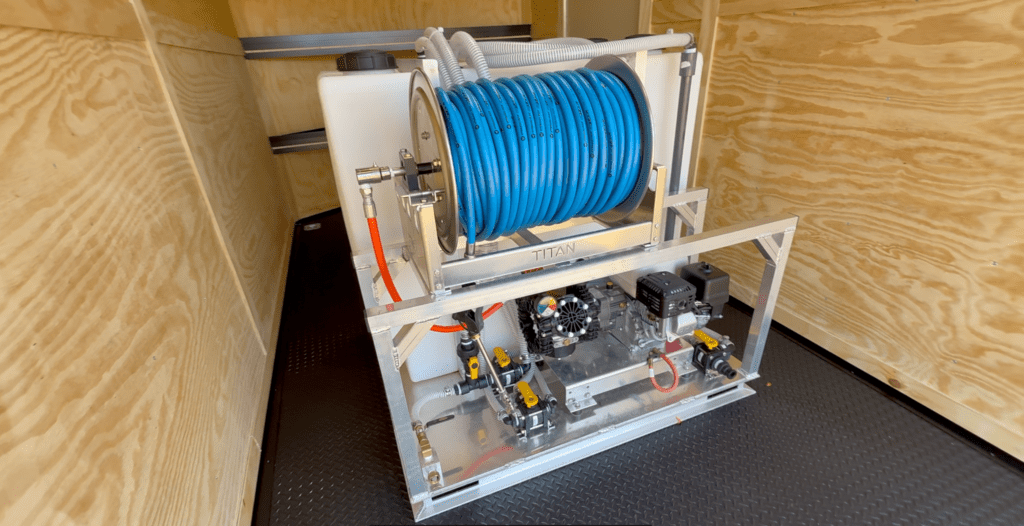
Uglyroof works with roofing contractors to add roof rejuvenation to their service mix — without requiring new equipment investments or specialized crews. If you’re a contractor looking to open new revenue streams in a tightening insurance environment, let’s talk.
Contact Us Today